

How Our Matching Service Works
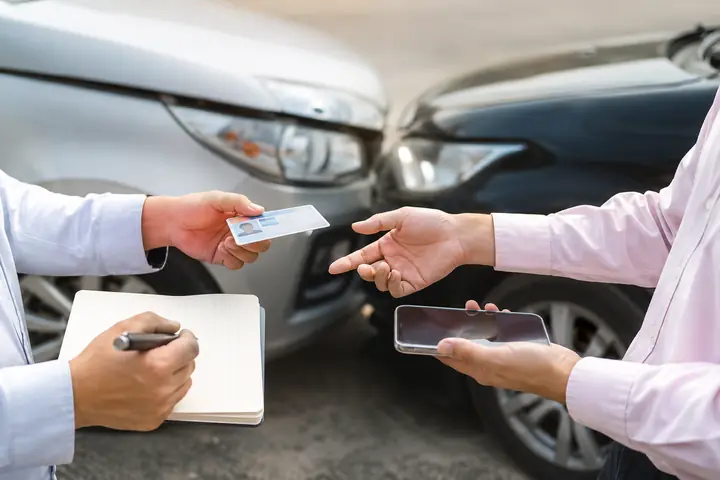
ontario-car-accident-lawyer.ca connects people involved in car accidents in Ontario with independent, licensed lawyers - free to use, no obligation, nothing to sign before the first conversation. If a dispute about what was exchanged at the scene becomes part of your claim, speaking with a lawyer early is the most practical way to understand your options.
Tell Us What Happened
Share a short description of your accident and what you're looking for help with. Whether the other driver refused to exchange information, fault is disputed, or you have questions about your claim, the details help match you with the right lawyer for your situation.
We Match You With a Lawyer From Our Ontario-Area Network
We connect you with an independent, LSO-licensed lawyer who handles cases like yours - motor vehicle accidents, fault disputes, accident benefits claims, and insurance matters specific to Ontario's regulatory framework.
Speak Directly With the Lawyer: Free, No Obligation
Ask questions about your specific situation before deciding anything. The initial consultation is free and puts you in direct contact with the lawyer - not a screener or intake coordinator who filters your questions before they reach anyone qualified to answer them.
Decide How to Move Forward
There's no pressure and no cost to get informed. You decide whether to retain the lawyer, seek a second opinion, or handle things yourself. ontario-car-accident-lawyer.ca costs nothing to use either way.
What Happens After a Car Accident in Ontario
What info to exchange after car accident situations is one piece of a broader sequence that matters for any claim you might make later. The steps below cover the full process from scene to claim:
- Make sure everyone is safe and call emergency services if anyone is injured or if the scene is creating a traffic hazard
- Exchange information with all drivers involved - see the checklist in the next section for exactly what information to exchange after car accident scenarios require
- Report the accident to police if it involves any injury, or if mandatory reporting rules apply - property damage over $5,000 triggers the reporting requirement under Ontario law
- Take photos of the scene before either vehicle moves - both vehicles from multiple angles, any visible injuries, road and weather conditions, and nearby traffic signals or signs
- Notify your insurer as soon as possible - Ontario generally requires notice within 7 days and delays can complicate a claim even when you have a valid one
- Keep records of all medical treatment, repair estimates, insurer correspondence, and any time missed from work as a result of the accident
Your Options After a Car Accident
Understanding what to exchange in a car accident connects directly to understanding which legal options are available afterward. What information to exchange in car accident situations shapes what each of the following tracks can realistically accomplish:
- Accident Benefits Claim - for medical, rehabilitation, and income-replacement benefits through your own insurer, regardless of fault; available even if the information exchange at the scene was incomplete
- Tort-Liability Claim - pursuing compensation from the at-fault party outside the no-fault benefits system, subject to Ontario's threshold rules; accurate scene documentation and a complete information exchange matter significantly here
- Small Claims Court - for lower-value property damage disputes that fall within its current monetary limit; the information exchanged at the scene becomes the factual record of what happened
What Information to Exchange in a Car Accident
At the scene, exchange the following with every other driver involved. What information to exchange in car accident situations is the same checklist whether the collision is a minor scrape or a serious crash:
- Full name and contact information - phone number and home address if requested by the other driver or required by police
- Driver's licence number - confirm the name on the licence matches what the other driver has told you
- Licence plate number and vehicle description - make, model, year, and colour of every vehicle involved in the collision
- Insurance company name and policy number - this is what your insurer needs to start a claim against the other driver's policy
- Location, date, and time of the accident - be specific about the intersection or road segment, direction of travel, and approximate time
If there are passengers or witnesses present at the scene, collect their names and contact details before they leave. What info to exchange after car accident situations includes bystander details that can matter significantly if the other driver later describes events differently to their insurer.
| Information Item | Why It Matters | Where to Find It |
|---|---|---|
| Full name and contact | Identifies the other driver for claims purposes | Licence or verbal confirmation |
| Driver's licence number | Confirms identity and driving status | Physical licence card |
| Licence plate + vehicle description | Links the vehicle to the correct insurance policy | Plate on the vehicle |
| Insurance company + policy number | Required to file or contest a claim | Insurance card or insurer app |
| Location, date, and time | Establishes the factual record of the accident | GPS, phone timestamp, or observation |
What to Exchange After a Minor Car Accident vs. a More Serious One
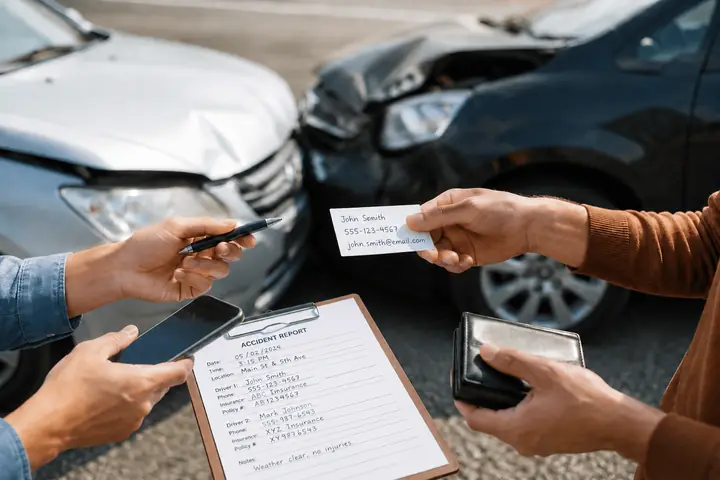
The basics don't change: what info to exchange after car accident situations is the same checklist whether the damage is minor or significant - name, licence, plate, insurance, and location. What changes is what happens next.
Minor damage with no injuries may be handled directly between insurers through Ontario's Direct Compensation Property Damage system, which handles vehicle repair without requiring a tort claim.
An accident involving injury typically means a police report is required, a medical record from shortly after the accident becomes critical to the claims process, and depending on the severity of the injury, a possible tort claim enters the picture.
What to exchange when in a car accident with significant injury is the same information - but the documentation that follows it matters considerably more.
What Not to Exchange or Discuss at the Scene
Knowing what information to exchange after car accident situations is equally about knowing what not to say or share. Several common mistakes at the scene create problems that show up weeks later in the claims process:
- Don't admit fault or speculate about who caused the accident - fault for insurance purposes is determined under Ontario's Fault Determination Rules, not by what drivers say to each other in the immediate aftermath
- Don't agree to a cash settlement with the other driver instead of going through insurance - verbal agreements at the scene waive your right to future claims, including for injuries that may not appear for 24 to 72 hours
- Don't share unnecessary personal information - your Social Insurance Number is not needed to exchange insurance details; providing it creates an unnecessary privacy risk
- Don't sign anything at the scene, including anything a tow truck operator hands you, without reading it carefully and understanding what you're authorizing
What to exchange in a car accident is specific - stick to the checklist and don't improvise beyond it under pressure from the other driver or from anyone else present at the scene.
Why Accurate Documentation Matters
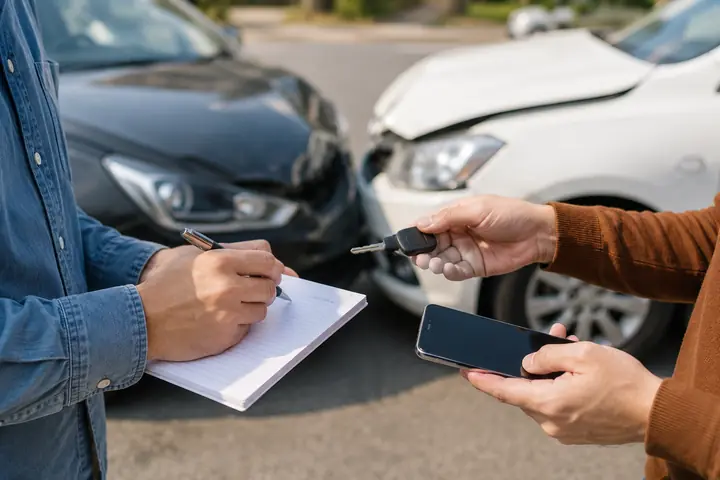
Most accidents are exactly what they look like - two drivers in the wrong place at the wrong time, a straightforward collision with clear documentation. A smaller number involve disputed facts, exaggerated injury claims, or in rare cases, staged collisions designed to generate insurance payouts.
What information to exchange in car accident situations protects you in both scenarios equally. Exchanging accurate, complete information and documenting the scene with photos before either vehicle moves creates a contemporaneous record that's much harder to dispute later.
If something about the accident feels off - an unlikely sequence of events, pressure to avoid involving insurance, or unusual insistence on a cash resolution at the scene - report your concerns to your own insurer. There's no need to confront the other driver directly.
What Can Affect the Time and Value of a Claim
Several factors influence how a claim unfolds after you've exchanged information at the scene:
- Whether the exchanged information was complete and accurate - gaps in the record create disputes that wouldn't otherwise exist and give the other insurer grounds to challenge your account
- Whether fault is disputed between drivers - incomplete documentation from the scene makes this significantly harder to resolve in your favour
- The severity of injuries and the volume of medical documentation obtained in the days and weeks following the accident
- Whether the accident was reported to police when required under Ontario law - missing the reporting obligation creates a gap in the official record
- Delays in notifying your insurer or providing documentation within the required timeframe
What to exchange when in a car accident is the foundation of the claim record. Everything built on it depends on getting this step right at the scene.
Why Use ontario-car-accident-lawyer.ca to Find a Car Accident Lawyer in Ontario
Vetted, Independent Network
Every lawyer in the ontario-car-accident-lawyer.ca network is LSO-licensed and independently practising. ontario-car-accident-lawyer.ca is not a law firm - it's a matching service that connects you with lawyers who focus specifically on motor vehicle and personal injury claims in Ontario, not general practitioners who handle these cases occasionally.
Free to Use, No Obligation
There's no cost to be matched with a lawyer through ontario-car-accident-lawyer.ca, and no obligation to hire anyone after the initial consultation. Getting informed about your options - including whether a dispute about what was exchanged at the scene affects your claim - costs you nothing.
Fast Matching
Most users are matched within one business day. If a limitation period or insurer response deadline is approaching, flag it clearly in your intake form and ontario-car-accident-lawyer.ca prioritizes the match accordingly.
We Are Not a Law Firm
ontario-car-accident-lawyer.ca connects you with independent, LSO-licensed lawyers. It does not provide legal advice, legal opinions, or legal representation. Nothing on this page constitutes legal advice for any specific situation.