

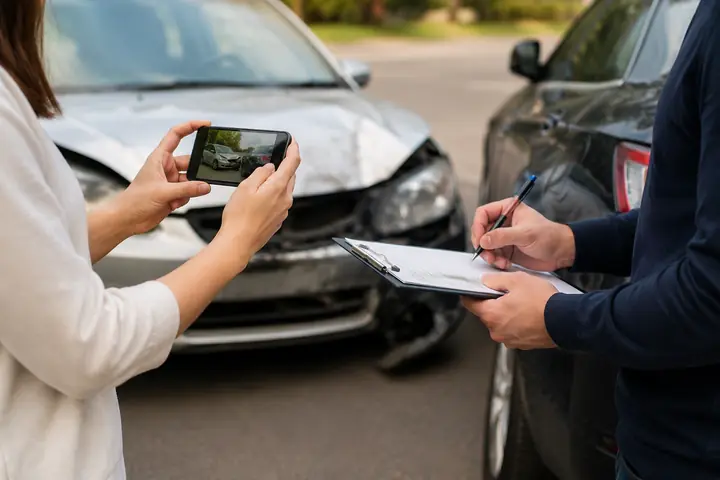
How Our Matching Service Works
ontario-car-accident-lawyer.ca connects people dealing with car accident questions in Ontario with independent, licensed lawyers - free to use, no obligation, nothing to sign before the first conversation.
Tell Us What Happened
Share a short description of your accident and the specific questions you have about coverage or liability. Whether you were the driver, the vehicle owner, or an injured passenger, the details help match you with the right lawyer.
We Match You With a Lawyer From Our Ontario-Area Network
We connect you with an independent, LSO-licensed lawyer who handles cases like yours - motor vehicle accidents, insurance coverage disputes, and liability questions specific to Ontario.
Speak Directly With the Lawyer: Free, No Obligation
Ask about your specific situation before deciding whether to move forward. The initial consultation is free, and you speak directly with the lawyer rather than a screener.
Decide How to Move Forward
There's no pressure and no cost to get informed. You decide whether to retain the lawyer, seek a second opinion, or handle things yourself. ontario-car-accident-lawyer.ca costs nothing to use either way.
What Happens After a Car Accident in Ontario
Whose insurance pays in a car accident becomes clearer once you've followed the right steps after the collision. The order matters - what you document and report in the first hours directly affects the claims process.
- Make sure everyone is safe and call emergency services if anyone is injured or if the scene is unsafe
- Exchange driver's licence, insurance, and contact information with all drivers involved - including vehicle registration details
- Report the accident to police if it involves any injury, or if mandatory reporting rules apply under Ontario law
- Take photos of the scene, both vehicles from multiple angles, any visible injuries, road conditions, and nearby traffic signals or signs
- Notify the vehicle owner's insurer as soon as possible - in Ontario this is generally required within 7 days, and delays can complicate a claim even when coverage exists
- Keep records of all medical treatment, repair estimates, insurer correspondence, and any time missed from work
Your Options After a Car Accident in a Borrowed or Lent Vehicle
If you crash someone else's car, whose insurance pays is one question - what you can claim is another. The options depend on fault, injury severity, and which policies apply.
| Option | What It Covers | Key Detail |
|---|---|---|
| Accident Benefits Claim | Medical costs, rehab, income replacement | No-fault; available through the vehicle owner's insurer first |
| Tort / Liability Claim | Pain and suffering, additional losses | Subject to Ontario's injury threshold test |
| Small Claims Court | Lower-value property damage disputes | Monetary limit applies |
Whose Insurance Pays When You Crash Someone Else's Car?
If you crash someone else's car, whose insurance pays in Ontario generally starts with the vehicle owner's policy - because Ontario insurance follows the vehicle, not the driver.
When you're behind the wheel of someone else's car with their permission and you cause an accident, their policy is typically the first to respond, up to its coverage limits. If those limits are insufficient, your own policy may provide secondary coverage depending on what it includes.
Coverage under the vehicle owner's policy generally applies when the driver meets all of the following conditions. A driver who falls outside any of these categories may find that the owner's insurer disputes the claim or reduces coverage significantly.
- Holds a valid driver's licence and is legally permitted to operate a vehicle in Ontario
- Has the owner's explicit or implied permission to use the vehicle at the time of the accident
- Is not listed as an excluded driver on the owner's insurance policy
- Is not using the vehicle for commercial purposes - personal auto policies typically exclude commercial use such as food or parcel deliveries
- Has not been using the vehicle on a regular, ongoing basis without being disclosed to the insurer
A driver can also carry their own protection through an add-on called OPCF 27 - Liability for Damage to Non-Owned Automobile Coverage. This endorsement extends a driver's personal policy to cover vehicles they don't own, including borrowed or rented cars, providing an additional layer of protection when the owner's limits aren't enough.
It's worth noting that a traffic violation - like a speeding ticket - without a collision goes on the driver's own record, not the vehicle owner's insurance file.
Whose Insurance Pays in a Car Accident?
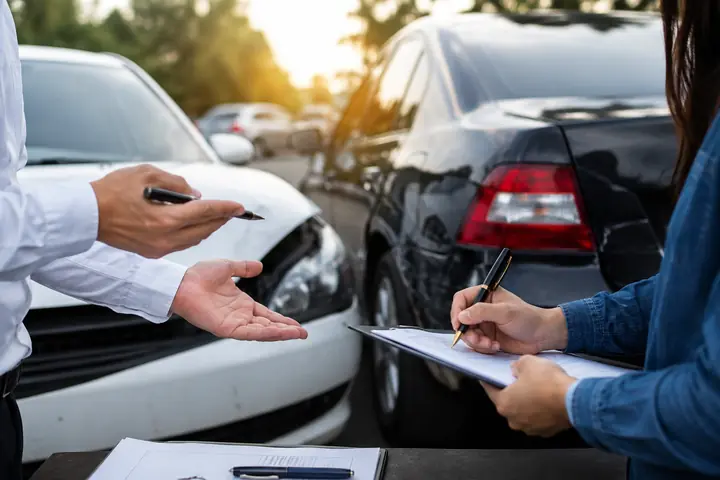
Whose insurance pays in a car accident outside the borrowed-vehicle scenario follows the same general principle: Ontario's insurance system is built around the vehicle, and each driver's own insurer typically handles accident benefits - medical costs, rehabilitation expenses, and income replacement - regardless of who caused the collision.
Vehicle damage and third-party liability are then assessed separately under Ontario's Fault Determination Rules.
Whose insurance pays in a car accident when a regular driver of a vehicle wasn't disclosed to the insurer is a more complicated question - that omission can be treated as misrepresentation, which puts the entire claim at risk of denial.
Whose insurance pays in a car accident also depends on whether optional benefits were added to either policy. Ontario's standard SABS amounts are the floor, not the ceiling - drivers who purchased optional increased benefits have access to higher limits for medical, rehabilitation, and income replacement coverage.
If the vehicle owner had those options and you were driving with permission, those higher limits may be available to you through their policy.
How Is Fault Determined in a Car Accident?
How is fault determined in a car accident in Ontario is a question with a specific legal answer - it's not decided by what drivers say to each other at the scene, and it's not based on who called the police first.
Fault in Ontario is assigned using the province's Fault Determination Rules set out in Ontario Regulation 668, which establish standardized fault percentages based on how specific types of collisions typically occur. How is fault determined in a car accident when both drivers disagree about what happened: the Rules apply regardless of either driver's account.
Under these rules, a driver can be found not at fault, partially at fault, or fully at fault for a collision.
How is fault determined in a car accident matters beyond just the immediate claim - the outcome affects which insurer pays for vehicle damage and liability, and it can also affect the vehicle owner's insurance premiums and claims-free discount even if they weren't the one driving when the accident happened.
How is fault determined in a car accident involving a borrowed vehicle follows the same Fault Determination Rules, with the vehicle owner's insurer typically involved in the process even though they weren't present at the scene.
Whose Insurance Pays in a Multi-Car Accident?
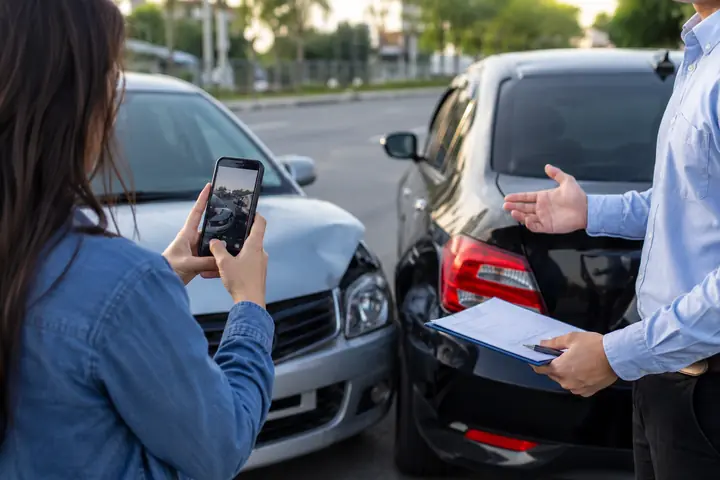
Whose insurance pays in a multi car accident follows the same Fault Determination Rules framework, but the analysis is more layered when more than two vehicles are involved. Fault can be split across several drivers, and more than one insurer may end up paying a portion of the total damages.
Whose insurance pays in a multi car accident for accident benefits - medical, rehabilitation, and income replacement - generally starts with each driver's own insurer under Ontario's priority rules, while vehicle damage and liability are sorted out based on each driver's assigned fault percentage.
Multi-vehicle claims tend to take significantly longer to resolve than two-car collisions. Whose insurance pays in a multi car accident when one of the vehicles involved was borrowed adds another layer - the owner's policy, the driver's policy, and potentially an OPCF 27 endorsement all need to be factored in.
Whose insurance pays in a multi car accident when one driver is uninsured or unidentified introduces a further complication, where your own uninsured motorist coverage or OPCF 44R family protection coverage may come into play. These situations are a common reason people reach out to a lawyer before accepting an insurer's initial position.
What Can Affect the Time and Value of a Claim
If you crash someone else's car, whose insurance pays is only part of the picture - what you can recover and how long it takes depends on several additional factors that vary by case:
- Whether fault is disputed or split between multiple drivers, which affects how liability is allocated across policies
- Whether the borrowed vehicle was properly insured and whether OPCF 27 or a similar endorsement applies to the driver's own policy
- The severity of injuries and the volume and quality of medical documentation from shortly after the accident
- Whether a regular driver of the vehicle was properly disclosed to the insurer before the accident
- Delays in reporting the accident to the insurer or providing documentation within required timeframes
Why Use ontario-car-accident-lawyer.ca to Find a Car Accident Lawyer in Ontario
Vetted, Independent Network
Every lawyer in the ontario-car-accident-lawyer.ca network is independently licensed by the Law Society of Ontario and focuses on personal injury and motor vehicle claims. ontario-car-accident-lawyer.ca is not a law firm - it's a matching service that connects you with lawyers who handle these cases specifically.
Free to Use, No Obligation
There's no cost to be matched with a lawyer through ontario-car-accident-lawyer.ca, and no obligation to retain anyone after the initial consultation. You get information first, then decide.
Fast Matching
ontario-car-accident-lawyer.ca connects you with a lawyer who handles cases like yours without the runaround. Most users are matched within one business day.
We Are Not a Law Firm
ontario-car-accident-lawyer.ca connects you with independent, LSO-licensed lawyers. It does not provide legal advice, legal opinions, or legal representation, and nothing on this page constitutes legal advice for any specific situation.