
How Our Matching Service Works
ontario-car-accident-lawyer.ca connects people involved in car accidents in Ontario with independent, licensed lawyers - free to use, no obligation, nothing to sign before the first conversation. If questions about police reporting, fault disputes, or your claim options arise after the accident, speaking with a lawyer directly is the most efficient path to answers.
Tell Us What Happened
Share a short description of your accident and what you're looking for help with. Whether the accident involved a police report, a hit-and-run, a disputed fault determination, or an uninsured driver, the details help match you with the right lawyer for your situation.
We Match You With a Lawyer From Our Ontario-Area Network
We connect you with an independent, LSO-licensed lawyer who handles cases like yours - motor vehicle accidents, accident benefits disputes, and liability claims specific to Ontario's regulatory framework.
Speak Directly With the Lawyer: Free, No Obligation
Ask questions about your specific situation before deciding anything. The initial consultation is free and puts you in direct contact with the lawyer - not a screener or intake coordinator who filters what reaches the person qualified to answer.
Decide How to Move Forward
There's no pressure and no cost to get informed. You decide whether to retain the lawyer, seek a second opinion, or handle things yourself. ontario-car-accident-lawyer.ca costs nothing to use either way.
What Happens After a Car Accident in Ontario
When to call police for car accident situations is the first decision in a sequence that matters for every claim that follows. The full post-accident process covers:
- Make sure everyone is safe and call 911 if anyone is injured or if police attendance is required under Ontario's Highway Traffic Act
- Exchange information with all drivers involved - full name, driver's licence number, insurance company, policy number, and a description of the vehicle
- Take photos of the scene, both vehicles from multiple angles, road and weather conditions, and any visible injuries before either vehicle moves
- Notify your insurer as soon as possible - Ontario generally requires notice within 7 days and delays can complicate a claim even when you have a valid one
- Get a copy of the police report or Collision Reporting Centre reference number if one was filed - this becomes part of the official record that both your insurer and the other driver's insurer will reference
- Keep records of all medical treatment, repair estimates, and correspondence with your insurer throughout the claims process
Your Options After a Car Accident
Who to call when in a car accident depends partly on which legal track you'll be using in the aftermath. Understanding the options helps clarify why police reporting and documentation matter differently for each one:
- Accident Benefits Claim - for medical, rehabilitation, and income-replacement benefits through your own insurer, regardless of fault; available whether or not police attended the scene, but a report strengthens the record
- Tort-Liability Claim - pursuing compensation from the at-fault party outside the no-fault benefits system, subject to Ontario's threshold rules; a police report establishes an independent factual account of what happened that's much harder to dispute later
- Small Claims Court - for lower-value property damage disputes that fall within its current monetary limit; documentation from the scene and any police or CRC record are directly relevant to the proceedings
When to Call Police for a Car Accident
When to call police for car accident situations in Ontario is set out in the Highway Traffic Act. You're legally required to call police to the scene if any of the following apply:
- Anyone is injured, regardless of how minor the injury seems at first - whiplash, concussion, and soft tissue injuries frequently don't produce clear symptoms for 24 to 72 hours after the collision
- Vehicle or property damage appears to exceed $5,000 combined across all vehicles and other property involved - this threshold is based on estimated total cost, not what's visible on the surface
- You suspect the other driver is impaired by alcohol, drugs, or another substance - this includes situations where behaviour at the scene suggests impairment even if you're not certain
If any of these apply, call 911 or your local non-emergency police line and wait for an officer or follow their instructions for reporting.
When to call police for car accident ontario situations also includes cases where the other driver refuses to provide their information or where something about the scene feels off - a staged accident, an unlikely sequence of events, or unusual pressure to resolve things without involving insurance.
| Situation | Required Action |
|---|---|
| Anyone injured | Call 911 immediately |
| Damage appears to exceed $5,000 | Call police - mandatory reporting applies |
| Suspected impairment | Call 911 immediately |
| Other driver refuses to exchange info | Call police - don't attempt to resolve privately |
| Hit-and-run or unidentified driver | Call police - note plate and vehicle description |
| Minor damage, no injuries, under $5,000 | Collision Reporting Centre may apply |
When to Call Police for a Car Accident in Ontario Isn't Required
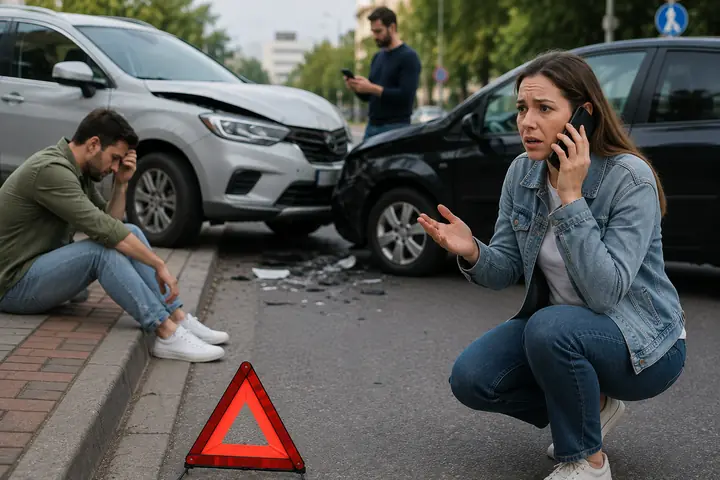
When to call police for car accident in ontario isn't the answer for every collision. If there's no injury and the damage looks clearly minor - well under the $5,000 reporting threshold - you can often report directly to your insurer instead of calling police to the scene.
In many areas of Ontario, including Toronto, a Collision Reporting Centre (CRC) can be used in person within 24 hours for eligible accidents - specifically those with no injuries, damage under $2,000, and no suspected impairment.
Ask your insurer whether a CRC applies in your area before assuming no formal report is needed. Skipping the report entirely when one is required creates a gap in the official record that can complicate both an accident benefits claim and a tort claim later.
The gap becomes particularly significant if the other driver later describes events differently to their insurer - without an independent report, it becomes one account against another.
Who to Call When in a Car Accident
Who to call when in an accident extends beyond the police question. Once the immediate safety and reporting steps are handled, who to call when you get in an accident typically involves several more contacts - each with its own timing:
- Your insurer - report the accident as soon as it's safe to do so; Ontario requires prompt notice and delays can affect coverage even when the claim itself is valid
- A tow service - if your vehicle isn't drivable, use a provider your insurer authorizes or one you trust independently; you're not obligated to accept the first tow truck that arrives at the scene, and unsolicited tow operators sometimes create additional problems with storage fees and repair authorization that complicate the claims process
- A lawyer - if you've been injured or if fault is disputed, speaking with a lawyer through ontario-car-accident-lawyer.ca helps you understand your options for accident benefits and a possible tort claim before you respond to the other driver's insurer or provide a recorded statement
What If the Other Driver Won't Stop or Can't Be Identified?
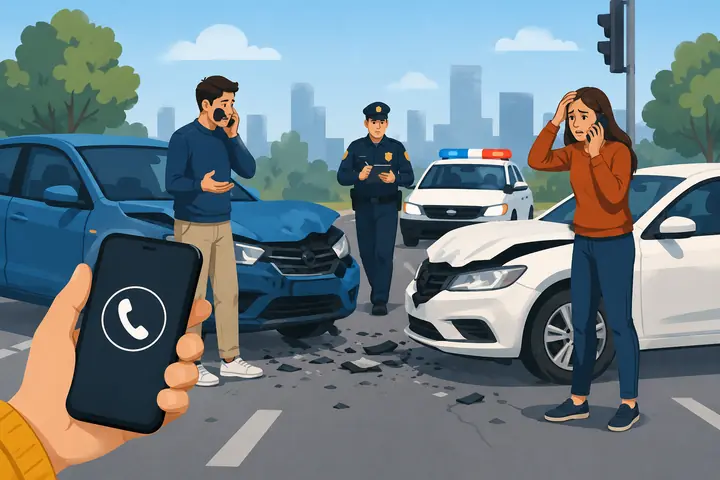
If the other driver leaves the scene or you can't get their information, calling police is strongly advisable even if the damage looks minor on the surface. Note the licence plate number, vehicle description, colour, make, model, and the direction the vehicle was travelling - and report it as a hit-and-run as soon as possible.
When to call police for car accident ontario situations involving a driver who flees the scene: call immediately rather than waiting to assess whether the damage threshold is met.
Your own policy may include uninsured or unidentified motorist coverage, but the insurer will want confirmation that the incident was reported to police before that coverage applies.
Without a police report on file, an unidentified driver claim is significantly harder to support regardless of how clearly the accident happened. The absence of a report in that situation shifts more of the burden onto your account alone.
What Can Affect the Time and Value of a Claim
Whether and how police were involved at the scene is one of several factors that directly affect how a claim unfolds and what it may ultimately recover:
- Whether police attended and a report was filed - the official record matters for both the accident benefits track and any tort claim, and its absence is noticed by adjusters on both sides
- Whether fault is disputed between drivers - a contemporaneous police report and thorough scene documentation reduce the scope of that dispute significantly
- The severity of injuries and the volume and quality of medical documentation obtained in the days and weeks following the accident
- Delays in notifying your insurer or providing documentation within the required timeframe - prompt action protects both the benefits and tort options
Why Use ontario-car-accident-lawyer.ca to Find a Car Accident Lawyer in Ontario
Vetted, Independent Network
Every lawyer in the ontario-car-accident-lawyer.ca network is LSO-licensed and independently practising. ontario-car-accident-lawyer.ca is not a law firm - it's a matching service that connects you with lawyers who focus specifically on motor vehicle and personal injury claims in Ontario, not general practitioners who handle these cases occasionally.
Free to Use, No Obligation
There's no cost to be matched with a lawyer through ontario-car-accident-lawyer.ca, and no obligation to hire anyone after the initial consultation. Getting informed about your reporting obligations and your claim options costs you nothing.
Fast Matching
Most users are matched within one business day. If a limitation deadline, insurer response window, or other time-sensitive step is approaching, flag it clearly in your intake form and ontario-car-accident-lawyer.ca prioritizes the match accordingly.
We Are Not a Law Firm
ontario-car-accident-lawyer.ca connects you with independent, LSO-licensed lawyers. It does not provide legal advice, legal opinions, or legal representation. Nothing on this page constitutes legal advice for any specific situation.